Home › Industrial and Heavy-Duty Asphalt Paving
Support heavy traffic with industrial asphalt paving in Florida, FL. We design and build pavements for truck yards, loading docks, and warehouse drives with proper thickness and base for frequent heavy axle loads. Reinforced edges, tight joints, and careful compaction help prevent rutting and premature failure.
Precision Asphalt Florida provides professional industrial asphalt paving throughout Florida, FL, Florida and the surrounding area. Our licensed, insured crew delivers safe, clean, on-time work with a free estimate before anything begins. Call (407) 250-7227 or request your free quote.
Industrial Asphalt Paving for Heavy-Duty Operations in Florida, FL
Precision Asphalt Florida designs and installs industrial asphalt paving that is built to handle real abuse from trucks, forklifts, loaders, and round-the-clock use. We focus specifically on the demands of manufacturing plants, distribution centers, trucking yards, waste facilities, and other heavy-industry sites in Florida, FL.
Our approach starts with how your site actually operates. We look at axle loads, turning patterns at loading docks, staging areas for trailers, forklift routes, and areas where fuel or chemicals are handled. This tells us where asphalt needs extra thickness, stronger base support, tighter compaction, or specialized surface treatments.
Unlike light commercial or residential work, industrial pavement design is less about appearance and more about structural performance and predictable maintenance. Precision Asphalt Florida engineers each project according to Florida traffic loading, local soils, and drainage patterns so your pavement resists rutting, shoving, and fatigue cracking instead of failing in a few high-stress zones.
How We Design Heavy-Duty Pavement for Your Facility
For industrial asphalt paving in Florida, FL, a one-size layout does not work. We begin with a project review and a site walk with your operations or facility manager. We identify where the heaviest loads occur, where trucks stop and start, and where standing water or subgrade movement has been a problem.
Next we evaluate soil and subgrade conditions. In many parts of Florida, native soils can be sandy with variable bearing capacity. Where needed, we specify stabilization using lime or cement, geo-grid reinforcement, or thicker aggregate base to prevent pumping and settlement. We also design cross slopes and surface grades so stormwater sheds toward planned drainage, not toward loading docks or building foundations.
Using traffic data, we determine pavement section thickness. For example, a heavy truck staging lane might receive a thicker asphalt section and a stronger base course than employee parking rows. By tailoring thickness to real-world loading, Precision Asphalt Florida avoids overbuilding low-stress areas and underbuilding high-stress zones. The result is a pavement structure that is cost-efficient but still capable of carrying your heaviest equipment every day.
Construction Process for Industrial and Heavy-Duty Asphalt Paving
On industrial projects, execution is where designs succeed or fail. Precision Asphalt Florida follows a controlled construction process tailored to high-load environments in Florida, FL.
We begin by stripping unsuitable material and proof-rolling the subgrade to identify soft spots. Any deflecting areas are undercut and replaced with compacted aggregate or stabilized material so the pavement does not settle under truck traffic. We then install base rock to a specific thickness and compact it in lifts with vibratory rollers that achieve the density required for industrial loads.
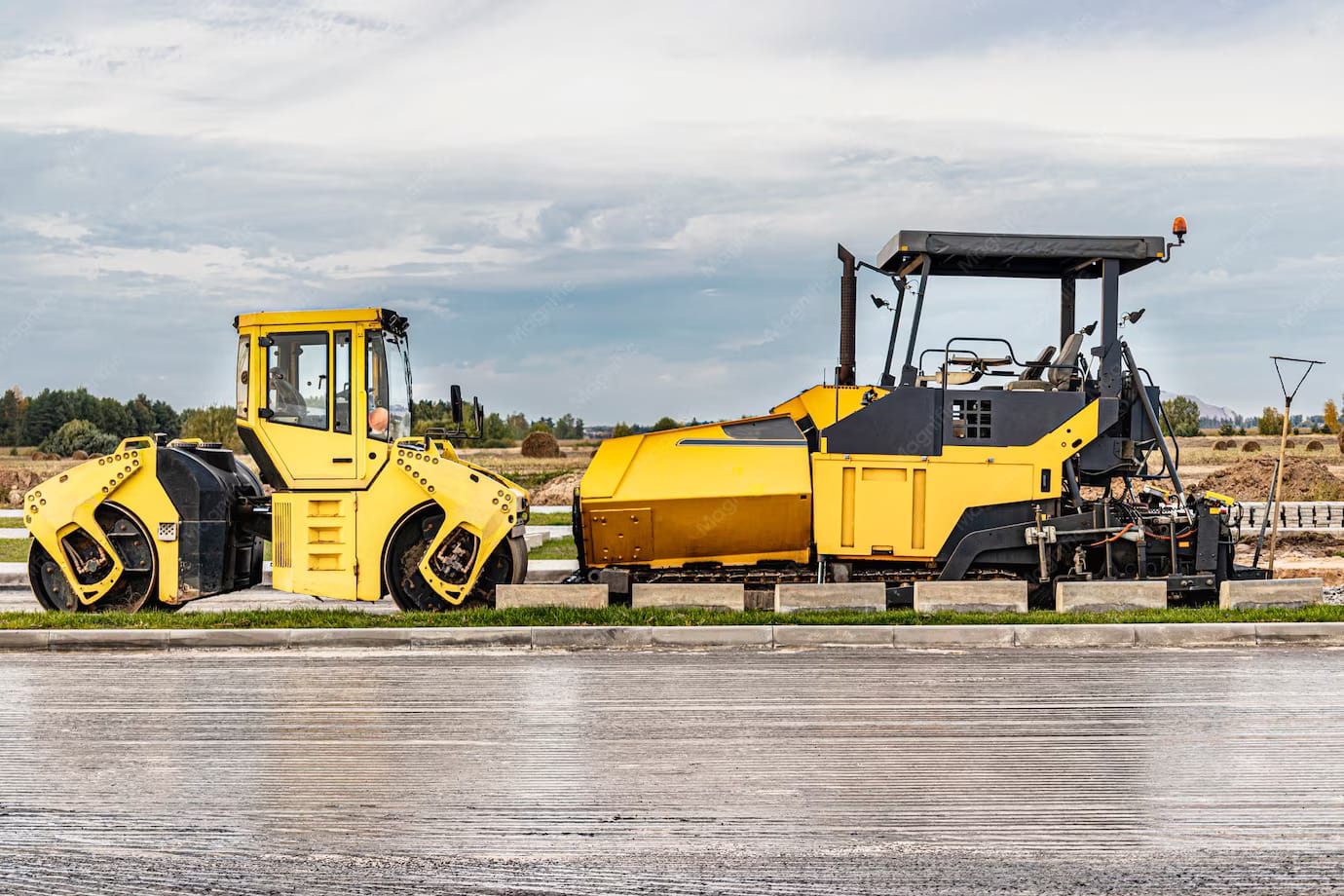
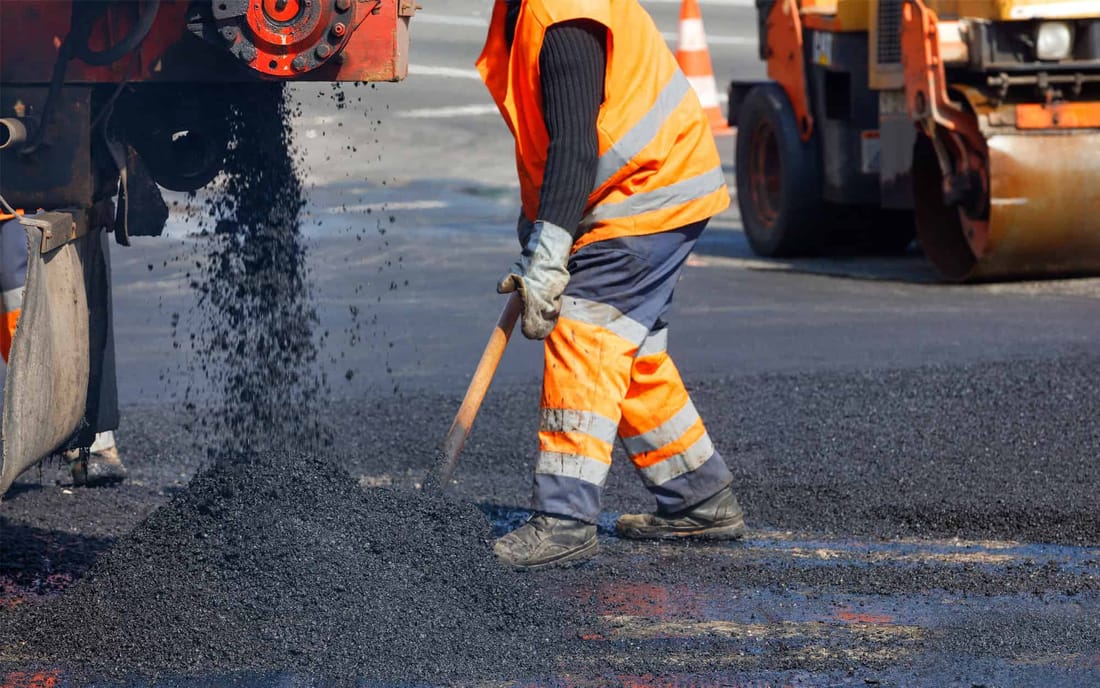
Hot mix asphalt is placed in multiple lifts, not poured in a single layer. For example, a heavy-duty drive lane may get a strong binder course for structural strength plus a dense-graded surface course for wear resistance. Joints are staggered and compacted while the mix is in the right temperature window so seams do not unravel later. We use steel drum rollers and pneumatic rollers to reach uniform density, which is what keeps rutting and shoving from appearing in wheel paths.
Throughout the process we coordinate closely with your operations team. For active sites in Florida, FL, we often phase work so that truck access, loading dock operations, and emergency access remain functional. This might involve night work, weekend schedules, or temporary traffic patterns that protect fresh pavement while maintaining your production schedule.
Material Options and Upgrades for Heavy-Duty Use
Not all asphalt mixes are equal, especially for industrial facilities. Precision Asphalt Florida selects or designs mixes based on the stresses your pavement will see in Florida, FL.
For high-heat, high-load areas such as truck scales, refueling lanes, or tight turning radii, we often recommend polymer-modified asphalt binders that resist rutting and flushing in Florida summers. In some industrial yards we specify a higher stone content mix that carries loads more effectively and stands up to steel-tracked equipment.
If your operation involves frequent fuel or oil spills, like at maintenance bays or fueling islands, we may incorporate sealers or surface treatments that help minimize softening from petroleum exposure. We can also design transition areas between asphalt and concrete, such as at dock aprons or dumpster pads, to reduce edge cracking and joint failures where materials meet.
Striping and surface treatments are selected with operations in mind. High-visibility markings for forklift lanes, truck queue areas, and pedestrian walkways improve safety and traffic flow. In some cases we recommend textured or different-colored surfaces for loading zones and crosswalks so equipment operators can see traffic patterns clearly, even at night or during rain.
Factors That Drive Cost for Industrial Asphalt Paving
Industrial asphalt paving in Florida, FL is an investment in uptime and safety. Precision Asphalt Florida is straightforward about what affects your cost so you can plan accurately.
Key drivers include pavement thickness, base design, and site preparation. Heavy truck lanes, container yards, and high-impact areas demand thicker asphalt and stronger bases, which cost more up front but typically lower long-term repair costs. Subgrade stabilization, additional drainage structures, and undercutting soft soils add expense, but they also prevent failures that can disrupt operations and require emergency shutdowns.
Access and phasing also influence price. Working around a 24/7 distribution center often requires night shifts, traffic control, and tighter coordination, which can increase labor costs but protects your throughput. Similarly, tight sites with limited material staging areas may take longer to build than open lots.
Material choices matter as well. Polymer-modified mixes or specialized surface treatments designed for extreme loading or chemical exposure cost more per ton, but for high-risk areas they often reduce rutting, raveling, and downtime over the life of the pavement. We walk you through these options with clear pros, cons, and lifecycle cost implications so you can prioritize where enhanced performance is worth the added investment.
Common Industrial Pavement Problems and How We Prevent Them
Heavy-duty sites in Florida, FL often see predictable failure patterns. Precision Asphalt Florida designs and builds to avoid these problems before they interrupt your operations.
Rutting in wheel paths is common where asphalt is too thin, poorly compacted, or built over a weak base. We prevent this by specifying appropriate thickness for each traffic lane, achieving target density with calibrated rollers, and reinforcing weak soils instead of building over them.
Fatigue cracking, often seen as alligator cracking in high-traffic areas, usually comes from repetitive overloading or inadequate structure. Our designs factor in the number and weight of passes from loaded tractors, trailers, forklifts, and yard hostlers. Where we expect intense traffic, we increase structural capacity or transition to different pavement types at key locations.
Drainage-related failures are especially important in Florida's climate. Standing water at loading docks or in truck courts accelerates stripping, potholes, and edge failures. We correct this with proper grades, inlets placed where water naturally wants to go, and tight quality control on final elevations.
For existing facilities with legacy problems, we can core the existing pavement, map failures, and create a rehabilitation plan that addresses root causes rather than just patching symptoms. This might include full-depth reclamation in specific lanes, adding a structural overlay, or converting problem zones to reinforced concrete pads while tying back into asphalt seamlessly.
What Florida, FL Facilities Get Working With Precision Asphalt Florida
Industrial and heavy-duty asphalt paving projects in Florida, FL require a contractor who understands both engineering and day-to-day operations. Precision Asphalt Florida combines local soil and drainage knowledge with the scheduling discipline needed for active industrial sites.
We begin with a planning conversation focused on your throughput, safety requirements, and maintenance windows, not just square footage. From there we deliver a clear scope that identifies pavement sections by use, outlines construction phases, and sets expectations for temporary traffic control and access.
Our crews are trained to work around active loading docks, truck traffic, and plant operations. We coordinate with your safety team, follow site-specific protocols, and keep communication lines open so schedule changes or weather delays are addressed quickly. After completion, we provide recommendations for routine maintenance, weight limits if applicable, and inspection intervals tailored to your facility.
When you are ready to discuss industrial asphalt paving for a new facility or an expansion in Florida, FL, Precision Asphalt Florida can review existing drawings, perform site walks, and provide a proposal that reflects the true operational demands on your pavement, not just the size of the lot.